As an introduction to the course, each team was tasked with researching and creating a presentation on the vivarium (vivaria). We broke our research into three major categories: History, Operations, and Case Studies. There is a link to the full report at the end of the page.
Introduction
A vivarium is an enclosed area for the keeping, observation, and research of organisms such as a zoo or aquarium. Humans have gathered plants and animals for the means of observation, entertainment and research for thousands of years. The history of vivaria as a means of research begins with humans’ interest in the study and classification of organisms. As various types and scales of vivaria have developed across the world through time, the structures and environments within them have also evolved. Early vivaria were mostly geared toward entertainment, but due to changes in social attitude, modern vivaria stress commitments to education, research, and conservation of living organisms.
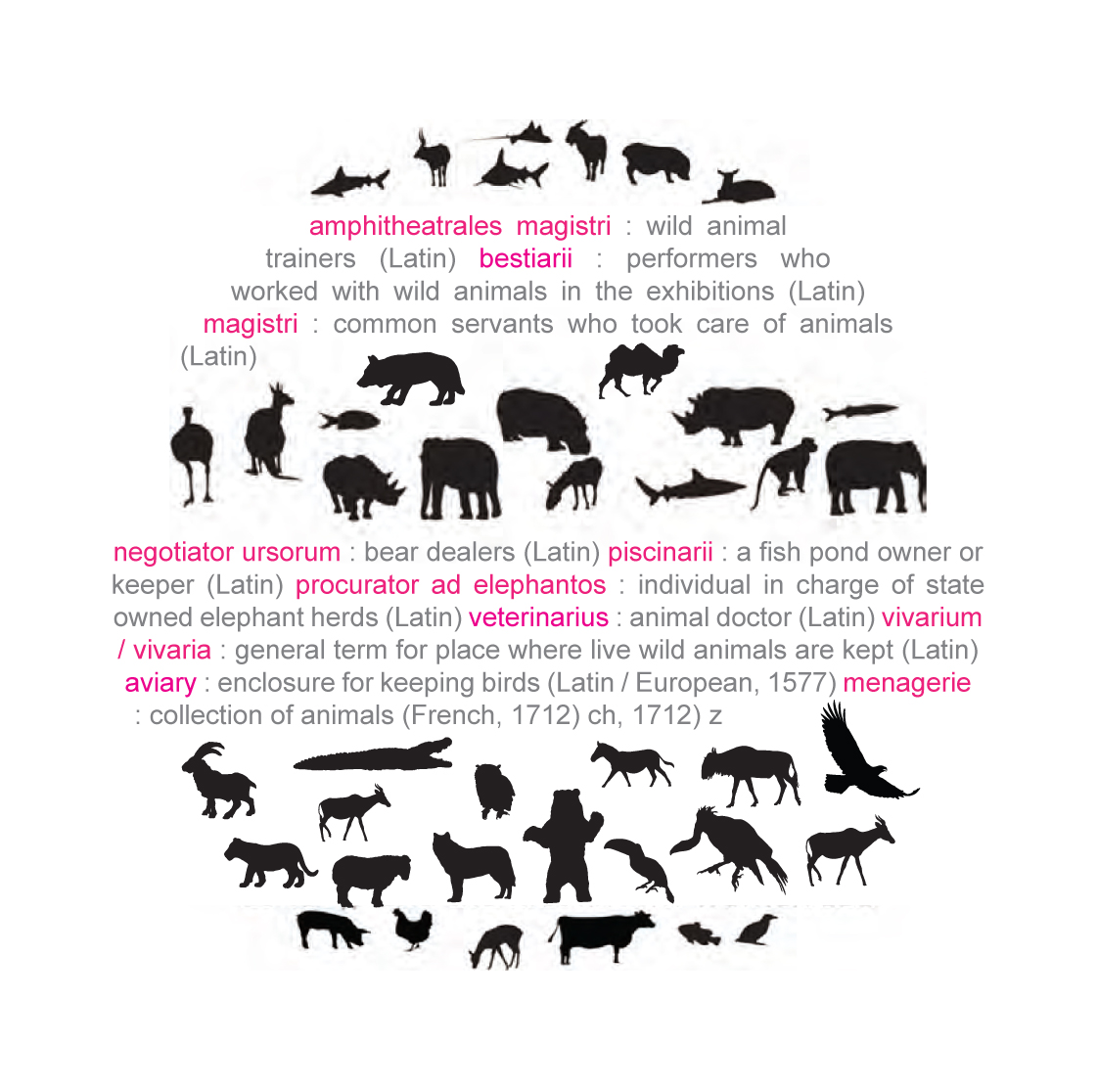
Terms and types of vivaria:
Menagerie- a form of keeping common and exotic animals in captivity the preceded the modern zoological garden
Zoological Garden/Park- a facility in which animals are confined with enclosures, displayed to the public, and possibly bred
Vivarium- an enclosed area for the keeping, observation, and research of organisms
Aquarium- a vivarium consisting of at least one transparent side in which water dwelling plants or animals are kept
Insectarium- a vivarium where living insects are kept, bred, and studied
Paludarium- a vivarium that incorporates both terrestrial and aquatic elements
Terrarium- a vivarium for land animals and plants, and small birds
Aviary- a large vivarium for confining birds
History
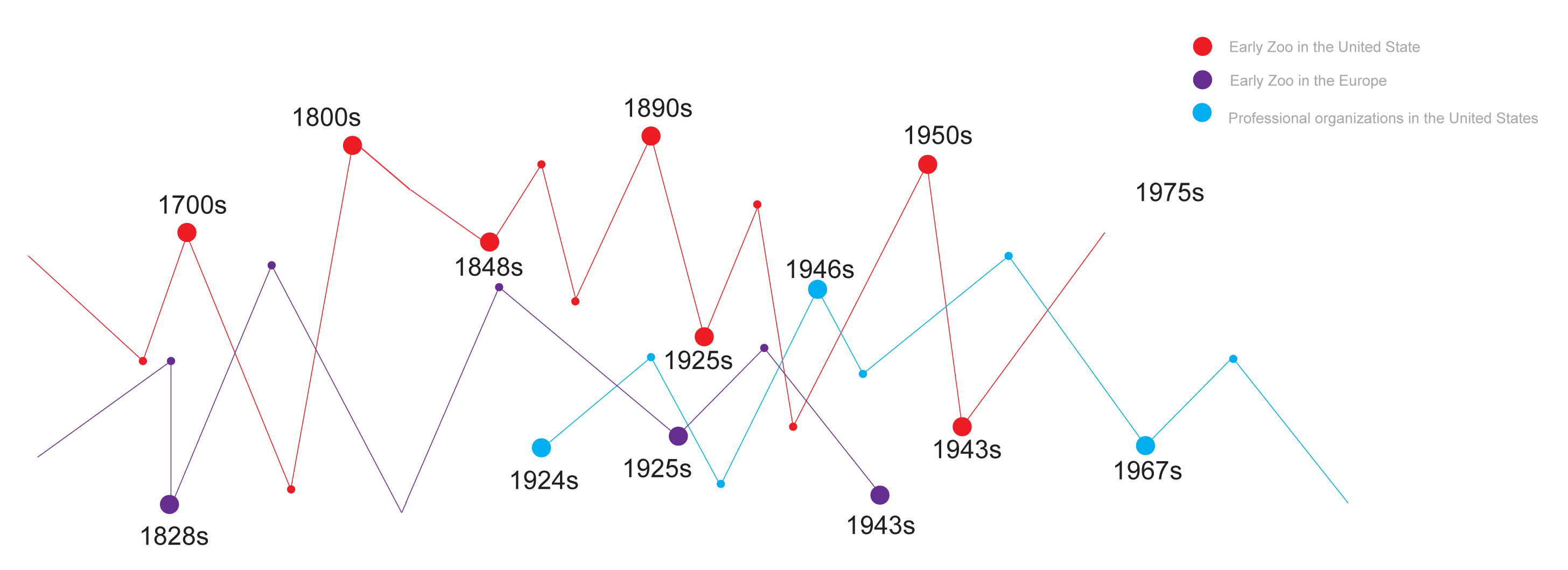

Design History of Environments for Animals
Over time, zoos’ physical forms have been a direct reflection of our society’s values and understanding of science. It is important to understand where we’ve been in order to move forward, and its is also important for visitors to the older zoos to understand why certain buildings and exhibits are the way they are (as we know, zoos usually do not have an abundance of money, and struggle to keep
their physical state up with the trends). Zoos, in the form we know them now, have been in existence since the mid-18th century. Prior to this, private collections existed throughout the world as far back, it is believed, to Mesopotamian times. Romans kept animals, of course, for sport,
but would display the animals in a zoo-like manner, prior to their being released to their deaths in the Coliseum. But we’ll focus on the mid-19th century forward.
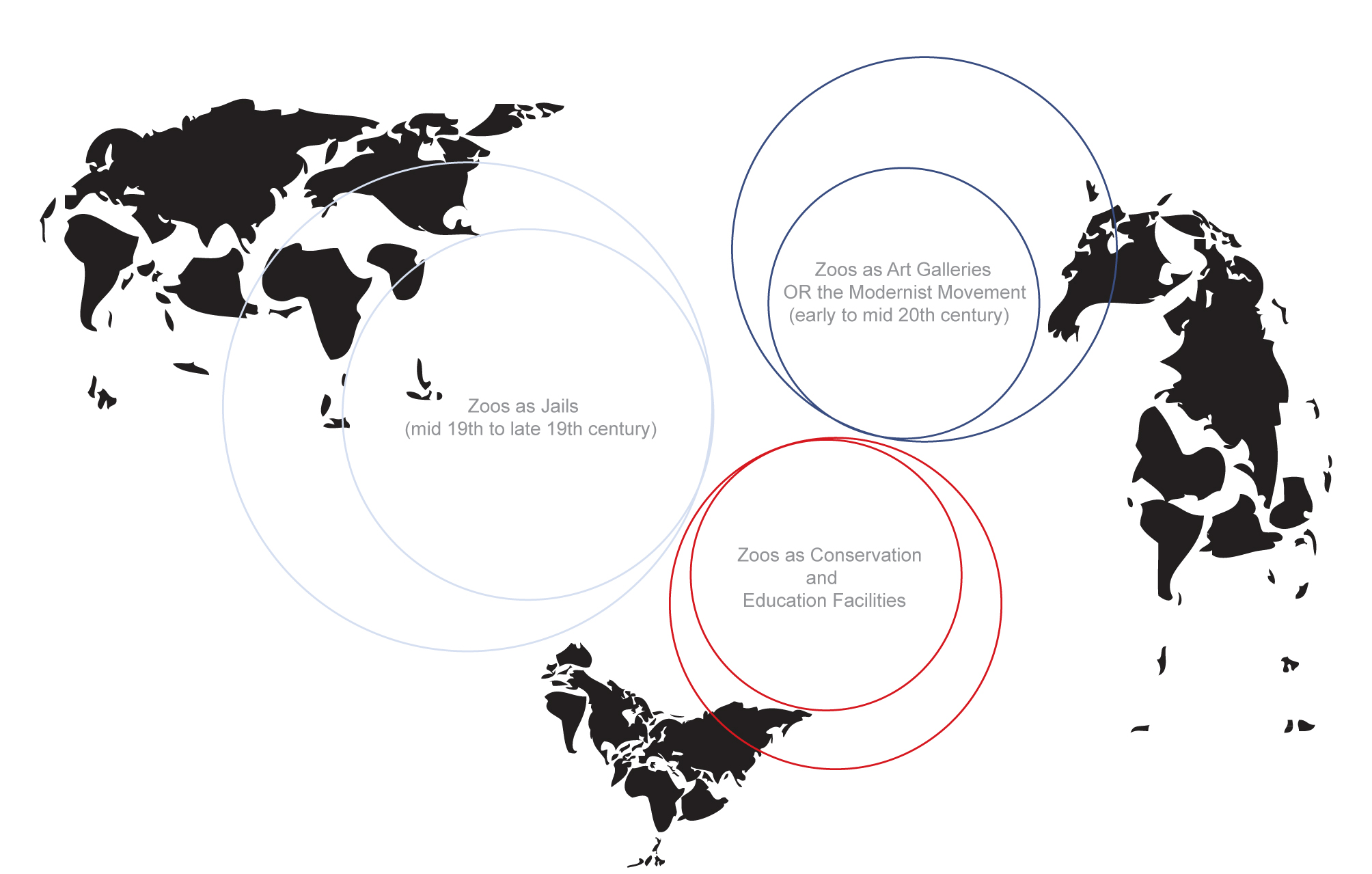
We can easily divide the eras in zoo design into three general categories:
1. Zoos as Jails (mid 19th to late 19th century)
2. Zoos as Art Galleries OR the Modernist Movement (early to mid 20th century)
3. Zoos as Conservation and Education Facilities
Operations (see full report at the end of the page)
Research included: Animal Management, Animal Transfers, Facilities Management, and Data and Record Keeping.
Case Studies (see full report at the end of the page)
Batumi Aquarium
Batumi, Republic of Georgia
Lincoln Park Zoo
Chicago, Illinois
Schonbrunn Tiergarten Zoo
Vienna, Austria
Duke Lemur Center
Durham, North Carolina
Next Assignment: Travel Exercise
Back to Master Class
Home
 Amanda Kight